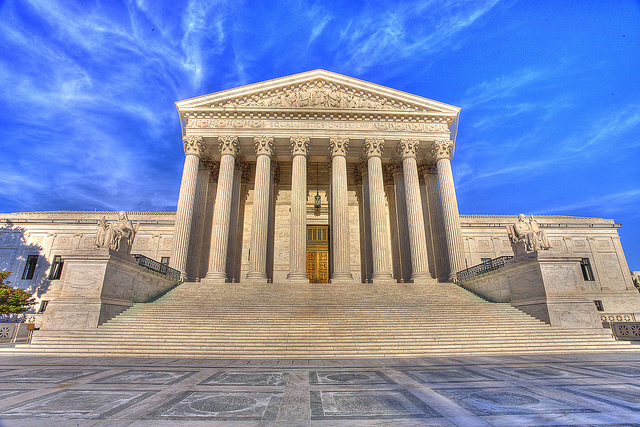
A Judge that believes in reason and a prosecutor who doesn't.
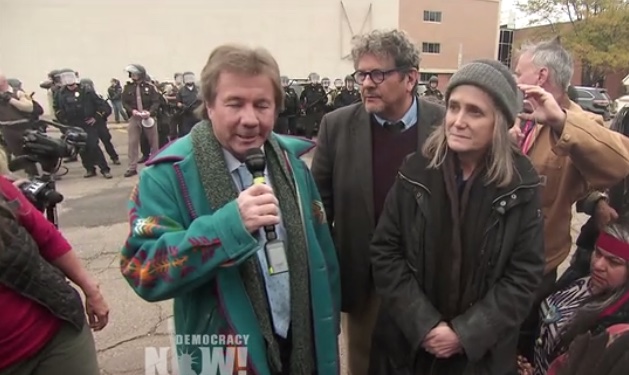
On Friday, North Dakota prosecutor Ladd Erickson drew national criticism from press freedom groups when he filed charges claiming that Goodman had participated in a riot when she filmed Native Americans protestors clashing with police and guards in September. The Native Americans were protesting the beginning of construction work on the Dakota Access Pipeline.
District Judge John Grinsteiner dismissed Erickson's charges against Goodman. The charges Erickson brought Friday were a substitute for his earlier criminal trespassing charge against Goodman, which he withdrew.
"This is a complete vindication of my right as a journalist to cover the attack on the protesters and of the public's right to know what is happening with the Dakota Access pipeline," said Goodman. "We will continue to report on this epic struggle of Native Americans and their non-Native allies taking on the fossil fuel industry and an increasingly militarized police in this time when climate change threatens the planet."
Goodman, the longtime host of the Democracy Now! television and radio show, shot video of a Sept. 3 protest that went viral and was viewed millions of times on Facebook and numerous TV networks. The footage showed guards using dogs and pepper stray against protesters on the Standing Rock Sioux Reservation. On Sept. 8, the State of North Dakota issued a warrant for Goodman's arrest.
Erickson, the prosecutor, asserted that Goodman shouldn't be treated as a journalist because she was too sympathetic to the protesters' point of view.
"She's a protester, basically," said Erickson, in statements published by Rolling Stone. "Everything she reported on was from the position of justifying the protest actions."
Goodman's report neither mentioned trespassing nor described alleged assaults on guards, Erickson added in statements made to The Bismarck Tribune.
The rioting charge carried a potential punishment of 30 days in prison and a $2,500 fine.
Background about the fight over the Dakota Access Pipeline can be found in a story by Los Angeles Times reporter Michael Hiltzik published earlier today. Standing Rock Sioux tribal leaders say the $3.8 billion, 1,200 mile pipeline goes through their ancestral lands, and they are concerned that a pipeline break could harm their water supply.
Pipeline opponents have been fighting in court for years, but have consistently lost. However, in September the Department of Justice, the Army Corps of Engineers, and the Interior Department announced that work would be halted "until it can determine whether it will need to reconsider any of its previous decisions."
--
by Joe Mullin
Ars Technica / 2016-10-17 19:04
Amy Goodman stands with her lawyer, Tom Dickson, outside the Morton County Courthouse.
reader comments 14
Share this story
A North Dakota prosecutor's controversial case against journalist Amy Goodman is over.On Friday, North Dakota prosecutor Ladd Erickson drew national criticism from press freedom groups when he filed charges claiming that Goodman had participated in a riot when she filmed Native Americans protestors clashing with police and guards in September. The Native Americans were protesting the beginning of construction work on the Dakota Access Pipeline.
District Judge John Grinsteiner dismissed Erickson's charges against Goodman. The charges Erickson brought Friday were a substitute for his earlier criminal trespassing charge against Goodman, which he withdrew.
"This is a complete vindication of my right as a journalist to cover the attack on the protesters and of the public's right to know what is happening with the Dakota Access pipeline," said Goodman. "We will continue to report on this epic struggle of Native Americans and their non-Native allies taking on the fossil fuel industry and an increasingly militarized police in this time when climate change threatens the planet."
Goodman, the longtime host of the Democracy Now! television and radio show, shot video of a Sept. 3 protest that went viral and was viewed millions of times on Facebook and numerous TV networks. The footage showed guards using dogs and pepper stray against protesters on the Standing Rock Sioux Reservation. On Sept. 8, the State of North Dakota issued a warrant for Goodman's arrest.
Erickson, the prosecutor, asserted that Goodman shouldn't be treated as a journalist because she was too sympathetic to the protesters' point of view.
"She's a protester, basically," said Erickson, in statements published by Rolling Stone. "Everything she reported on was from the position of justifying the protest actions."
Goodman's report neither mentioned trespassing nor described alleged assaults on guards, Erickson added in statements made to The Bismarck Tribune.
The rioting charge carried a potential punishment of 30 days in prison and a $2,500 fine.
Background about the fight over the Dakota Access Pipeline can be found in a story by Los Angeles Times reporter Michael Hiltzik published earlier today. Standing Rock Sioux tribal leaders say the $3.8 billion, 1,200 mile pipeline goes through their ancestral lands, and they are concerned that a pipeline break could harm their water supply.
Pipeline opponents have been fighting in court for years, but have consistently lost. However, in September the Department of Justice, the Army Corps of Engineers, and the Interior Department announced that work would be halted "until it can determine whether it will need to reconsider any of its previous decisions."
Shared via Inoreader
Sent from my iPad

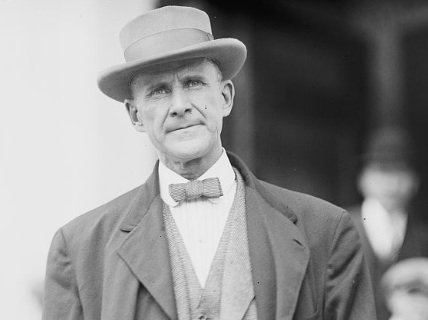 On this day in 1918 federal authorities sentenced the socialist leader Eugene Debs to serve 10 years in federal prison for violating the Espionage Act, a 1917 law that made it a federal offense to interfere with U.S. involvement in World War I. How did Debs run afoul of this notorious law? He delivered an anti-war speech to a crowd of leftists out for an afternoon picnic in Canton, Ohio.