Monday, October 3, 2016

Cop (unsuccessfully) sued department for releasing video of him abusing suspect


by David Kravets

Ars Technica / 2016-10-03 14:54

Denton's first incident...
reader comments 72
Share this story

A federal appeals court on Monday dismissed a lawsuit brought by a fired Oklahoma police officer who sued his former department for damages after the agency released a video of the officer roughing up a suspect. The officer, Mike Denton, was fired and then reinstated with full back pay before being fired again years later after another video surfaced of him allegedly using excessive force on someone. Denton previously claimed the first video's release was a violation of his First Amendment right to free speech and association.

The 10th US Circuit Court of Appeals said the former officer did not prove that the release of the 2011 video by the Owasso Police Department was done in retaliation. Denton had previously e-mailed fellow union members urging them to reject a proposed collective bargaining agreement. But ultimately, the court said that Denton proffered "unsubstantiated allegations" (PDF).

The officer's suit, however, highlights that different people can come to varying conclusions about the value of police video. This idea first came to light with the Rodney King beating, but a similar split occurred with videos in Charlotte, North Carolina and El Cajon, California just last week. In this instance, Denton likely would not have found himself in hot water at all if not for the initial video.

In the Denton matter, the police department gave the Tulsa World video footage in 2011. Court documents describe this footage as Denton stepping on a suspect's head and then positioning the suspect's arms so that he "drove the suspect's face into the floor." What's more, the video shows Denton elbowing "the suspect in the face three times."

Last year, the Owasso City Council agreed to settle the federal civil rights lawsuit brought by the suspect whose abuse was caught on tape. The city agreed to pay $75,000 to Bryan Spradlin, 30. Arrested at his wife's residence on suspicion of intoxication, Spradlin claimed in his federal suit that he "suffered from numerous injuries, including facial cellulitis, due to Defendant's failure to secure immediate medical attention." The suit claims he also "suffered severe humiliation and emotional distress due to his abusive, demeaning, and humiliating treatment by the Officers."

Denton was fired in 2011 on allegations that he violated the department's excessive force rules. An arbitrator reinstated the officer a year later, ordering him to be given back pay and benefits totaling $283,000. Next, a Tulsa judge concluded that reinstatement would pose a "special risk of injury, physical and psychological, to citizens and, if he is allowed reinstatement, the department will be faced with explaining why Owasso allows abusive conduct by its officers, which is against the law." An Oklahoma appeals panel reversed this decision, and the state's Supreme Court declined to intervene—meaning that Denton returned to his job in 2014 with back pay plus $47,000 in overtime and $36,000 in interest, according to the Tulsa World.

Now Denton has been fired again, and he's accused of using excessive force on a second suspect, another incident captured on video. He faces an assault trial beginning November 28. Denton is accused of pushing the barrel of a shotgun through the window of a vehicle and repeatedly using that weapon to hit the head of a stolen-car suspect who led authorities on a chase for 45 minutes.

Listing image by YouTube KRMGTulsa

--

Shared via Inoreader


Sent from my iPad

Meth, Hitler and the Reich: the true, untold story of the Nazis' dependence on coke, meth and oxy


by Cory Doctorow

Boing Boing / 2016-10-03 11:01

050-056c026d-1c66-4d42-9fae-a8

blitzed-1.jpg?w=970 Novelist Norman Ohler became fascinated with the Third Reich's reliance on opiods and methamphetamines when DJ Alexander Kramer mentioned it to him in passing; he set out to write a novel, but in Blitzed: Drugs in the Third Reich he produced what historian and authority on the Third Reich Ian Kershaw called "a serious piece of scholarship."

report this ad

Ohler worked from the papers of Dr Theodor Morell, Hitler's personal physician, who supplied Hitler with quantities of Pervitin (AKA crystal meth) and Eukodal (AKA oxycodone). In parallel with Hitler's increasing reliance on these drugs, the Reich adopted a policy of prescribing meth and oxy to the citizenry and the soldiery, with women being advised to take two or three meth-laden Hildebrand chocolates ("always a delight") to help with their housework and weight-loss. Pervitin was "National Socialism in pill form."

Dr Otto Ranke, director of the Institute for General and Defence Physiology, believed that meth "made sleep unnecessary" and worked for 50-hour stretches, and he told army doctors to give the soldiers "one tablet per day, two at night in short sequence, and another one or two tablets after two or three hours if necessary." The blitzkrieg was fuelled by meth, from the pilots to Rommel's tank commanders, and the Wehrmacht drew up plans for one-man U-boats who'd sail up the Thames without any relief pilots, eating drugs to stay awake for days at a stretch. Not meth, though: the generals wanted the U-boat commanders to chew cocaine chewing gum, which was tested on concentration camp prisoners who were made to chew the gum and walk until they dropped from exhaustion.

The coke chewing gum turned out to be incompatible with immobilizing marines in tiny metal underwater tubes -- the U-boat pilots suffered psychotic meltdowns.

Morell treated Hitler (and later, Mussolini) with incredible doses of oxy and meth, and supplemented Hitler's regime with cocaine. This had such an obviously terrible effect on Hitler that the Reich's top power-brokers did everything they could to remove Morell, but Hitler wouldn't let them. Between drug infusions, Hitler would be "so frail he could barely stand up," then he'd be up and about, even playing tennis.

When the Allies bombed the Reich's main meth factory, Hitler -- and the Reich -- went into withdrawal. Hitler's health was so bad that later historian speculated he had Parkinson's.

He pauses. "You think it [nazism] was orderly. But it was complete chaos. I suppose working on Blitzed has helped me understand that at least. Meth kept people in the system without their having to think about it." His hope is that his book will be read by a younger generation of Germans who would rather look to the future than dwell on the past. Is the right rising again? Is that why he wants them to read it? "It is quite a dangerous time. I hate these attacks on foreigners, but then our governments do it, too, in Iraq and places. Our democracies haven't done a very good job in this globalised world." That said, he doesn't think the new party of the right, Alternative for Germany, may be the threat it appears (in elections earlier this month, it outperformed Angela Merkel's Christian Democrats). "The right wing always had so little purchase here [after the war] because of our history," he says. "When I was young, you would never even see a German flag. The first time I did was in 1990, when Germany won the World Cup. So perhaps this is just a correction."

Before I head to the airport, Ohler agrees to take me to see what remains of the Temmler factory – which last time he looked still stood in Berlin-Johannisthal, a part of the city that used to be in the east – and so it is that we set off on a bright blue day (in the movies, the east seems always to be grey and cold) in search of what remains of Dr Hauschild's white-tiled laboratory. Twenty minutes later, we pull up in a residential street, all window boxes and net curtains, as quiet as the grave. "Oh, my God," he says, unfolding his long, thin legs from the car. "Wow. It's completely gone."

Blitzed: Drugs in the Third Reich [Norman Ohler/Houghton Mifflin Harcourt]

High Hitler: how Nazi drug abuse steered the course of history [Rachel Cooke/The Guardian]

(via Super Punch)

Shared via Inoreader


Sent from my iPad

Republican Alabama Chief Justice Roy Moore removed from office for gross misconduct


by Rob Beschizza

Boing Boing / 2016-10-03 09:46

judge_roy_moore

It's officially a suspension, but it lasts the rest of his term: Alabama Chief Justice Roy Moore was removed from office for gross misconduct Friday for abusing his office to try and block same-sex marriage legislation. It's his second canning; always the same old shit with Roy.

Moore's misconduct regarding same-sex marriage litigation was sweeping and extensive. In January of 2015, a federal judge invalidated the state's same-sex marriage ban. Moore promptly wrote letters to probate judges insisting that they remained legally prohibited from marrying gay people—in effect, demanding that they violate a federal court order. In May of that year, the judge explicitly held that probate judges must issue marriage licenses to all couples, same-sex or opposite-sex. The next month, the Supreme Court held that same-sex marriage bans violate the 14th Amendment to the United States Constitution.

Meet Alabama's next governor!

--

Shared via Inoreader


Sent from my iPad

Duterte: Human Rights Is The “Antithesis of Government”

Duterte: Human Rights Is The “Antithesis of Government”:


rodrigo_duterte_and_laotian_president_bounnhang_vorachith_cropped
The election of Philippine President Rodrigo Duterte constitutes the lowest point for the struggling Filipino democratic system.  Duterte has used profanities against President Obama, the United States Ambassador to the Philippines, Pope Frances, the United Nations and others who have questioned his blood-soaked reign as president.  Recently, he even compared himself to Hitler in not only refusing to stop his extrajudicial killings of alleged criminals but saying that he was prepared like Hitler to murder millions.  Now this budding tyrant has declared that the very  concept of human rights is the “anti-thesis of government.” In reality it is Duterte who is pushing the Philippines back into a state of Nature where might is right and government is merely the dominion of the powerful over the powerless. What is particularly chilling is that Duterte is a lawyer and former prosecutor.


Duterte has ordered the killing of thousands and even personally tied to past murders from his time as a prosecutor.  He told the audience of policewomen “[Don’t listen to] human rights (groups), because human rights is always the anti-thesis of government.”  He has previously said “I don’t call about human rights.”

It is already clear that Duterte believes that the definition of “government” includes extrajudicial killings, authoritarian rule, and contempt for rule of law.  However, he now maintains that government cannot by definition include the concept of human rights.

As an attorney, Duterte is an utter disgrace to our profession.  As a national leader, he is little more than a profane, petty tyrant.  The United States cannot simply ignore his murderous and despotic policies — no matter how important an ally the Philippines may be.


Filed under: Criminal law, International


Original enclosures:
ad516503a11cd5ca435acc9bb6523536?s=96&r=G


How Uber Plans To Conquer The Suburbs

How Uber Plans To Conquer The Suburbs:


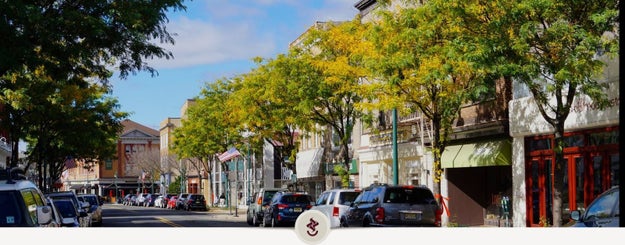
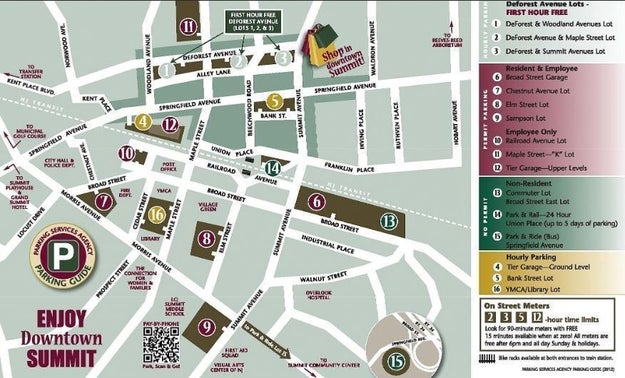
Summit, New Jersey, a bedroom community to New York City, will begin subsidizing Uber rides for residents traveling to and from the local train station starting Monday — a move the town initiated to avoid building a new parking lot, a multimillion-dollar effort. For Uber, the partnership is another step in a series of strategic moves to extend its reach to the suburbs.

Summit has a population of about 22,000 and its own NJ Transit Rail Station, which is a 45-minute ride from New York’s Penn Station. When Michael Rogers became Summit’s city administrator about a year ago, he noticed that most everyone complained to him about parking, he told BuzzFeed News.

Parking near Summit’s train station is a nightmare. Commuters buy parking permits, but are not assigned spaces, and often waste 15 to 20 minutes prowling for a spot in the morning, Rogers said. But building a new parking lot to address commuter demand would be a long-term, multimillion-dollar endeavor. So Rogers reached out to Uber’s New Jersey general manager, Ana Mahony, last October and pitched an idea: What if Summit subsidized commuters’ Uber rides to the town’s train station? Priced at $2 each way, the rides would cost commuters the same as an all-day parking permit. The deal would reduce demand for Summit's hard-to-come-by parking spaces and create a steady pool of demand for Uber.

“We wanted to offer residents a convenient alternative to driving and looking for parking spaces, which can be scarce,” Rogers told BuzzFeed News. “If I could free up 100 parking spaces, that would help alleviate some of the demand and capacity constraints. One hundred parking spaces is pretty significant in our system.”

Uber was intrigued. After some discussion, it agreed to a six-month pilot program for about 100 Summit residents.

Summit is about 6 square miles, which keeps ride-hail fares within its boundaries relatively inexpensive. Residents will have to opt into the Uber pilot program, and the ride-hail company will denote their accounts for the promotion. Residents who have already purchased $4-per-day parking permits will be able to take Uber to the train station for free. Those without prepaid parking permits will pay $2 each way. Summit will reimburse Uber for the difference between the flat fares and the true cost of a ride, which drivers will receive up front.

The benefit is clear for Summit, which now can forgo massive capital expenditures on a new parking lot it would otherwise need to build and maintain. Instead, it can pay a fraction of that amount to shuttle people to and from the train using Uber. Rogers told BuzzFeed News that he expects the deal will cost Summit only about $167,000 annually, a far cry from the likely $10 million it would cost to build a parking lot — plus, Summit doesn’t have enough idle land downtown, anyway.


Via cityofsummit.org

For Uber, the Summit pilot is a new way to tap into the sprawling and unconquered US ride-hail market beyond the major metropolitan ones it dominates. While Uber and Lyft have saturated most major cities, only 15% of Americans say they have used ride-hailing services, and another 33% claim to be unfamiliar with them, according to a late 2015 Pew Research Center survey. Meanwhile, the same survey found that 21% of urban Americans say they have used ride-hail services, compared with 15% of suburb-dwellers.

Partnerships with local governments also help Uber show commuters how ride-hail can be an alternative to driving — especially if it doesn’t cost any more than parking a car in the lot outside the train station. (Los Angeles, a city synonymous with car culture, has become a proving ground for this shift.)

It helps that Summit’s affluent population is already familiar with Uber. In December, while negotiating the commuter pilot program, Summit paid for an Uber promotion that gave residents $5 rides within its borders, an effort to ease congestion and drunk driving during the winter holidays. Rogers said called the promotion “very, very successful.” The partnership worked out nicely for Uber as well: Ridership increased 300% for the month compared with the year prior, Rogers said.

Uber's partnership with Summit is one of a handful of deals with smaller cities and towns outside the major metro areas on which the company built its business. In March, Altamonte Springs, Florida, became the first town to subsidize ride-hail services for its residents. Ten miles north of Orlando, Altamonte underwrites 20% of the cost of every Uber ride within its borders; it covers up to 25% if the rider is going to or from the local light rail. Passengers need only enter “Altamonte” in the promotion-code field in the Uber app to receive the proper discount for rides within the city's geofenced boundaries. Then Uber bills Altamonte Springs at the end of the month, and the city cuts a check.

For city administrators and local transportation agencies with strained budgets, ride-hail subsidy programs like these are another solution to the so called “first and last-mile” problem: getting people to a bus or rail stop so they can ride public transportation to their final destinations.

In February, the Pinellas Suncoast Transit Authority County, near Tampa Bay, Florida, launched a pilot program in which the agency covers half the cost of Uber rides up to $6 to and from designated stops near local transit centers and bus stops. And in San Francisco, the developers of Parkmerced, an apartment and townhome community, offer new residents a $100 monthly stipend toward “multimodal transportation,” including Uber.

The Summit partnership, though, offers a different spin on that model. While other cities have offered Uber or Lyft subsidies in an effort to increase ridership for public transportation, Summit is using Uber to streamline its residents’ commutes, a move that could foster a dependency on the ride-hail service in a town, where people own homes with multi-car garages and drive to get everywhere.

“It may affect decisions personally in the future, where they realize a family doesn’t necessarily need two cars,” Rogers said. “They might say, ‘You know, we used to have this second car because I needed it to go to the train station.’ And the car would just sit there.”


Sunday, October 2, 2016

British Man May Be the First Person Cured of HIV


by Rhett Jones

Gizmodo / 2016-10-02 15:02

British Man May Be the First Person Cured of HIVPhoto: Getty

A 44-year-old man in England is possibly the first person in history to be cured of HIV. Scientists working on an experimental new therapy say that the virus is now completely undetectable in his blood.

A team gathered from five UK universities is currently conducting trials on 50 people. Mark Samuels, managing director of the National Institute for Health Research Office for Clinical Research Infrastructure, told The Sunday Times, "We are exploring the real possibility of curing HIV. This is a huge challenge and it's still early days but the progress has been remarkable."

Currently, antiretroviral therapies can target active T-cells which are infected with HIV but they cannot treat dormant T-cells. This means that patients bodies continue to reproduce the virus.

"This therapy is specifically designed to clear the body of all HIV viruses, including dormant ones," Professor Sarah Fidler, a consultant physician at Imperial College London, told the Times.

Working in two stages, the new treatment consists of a vaccine to help the body recognize any HIV-infected cells and a drug called Vorinostat activates the dormant T-cells. This method could give a patient's immune system the tools it so desperately needs.

The patient has not been identified but we know he's a social care worker in London. He is cautiously thrilled about the results saying, "It would be great if a cure has happened. My last blood test was a couple of weeks ago and there is no detectable virus."

Fidler says that the researchers are still a long way from a finished therapy, "We will continue with medical tests for the next five years and at the moment we are not recommending stopping Art but in the future, depending on the test results we may explore this."

[The Telegraph]

--

Shared via Inoreader


Sent from my iPad

Fukushima Radiation Has Contaminated The Entire Pacific Ocean (And It's Going To Get Worse)


by Tyler Durden

Zero Hedge / 2016-10-02 11:29

Submitted by Whitney Webb via TrueActivist.com,

The nuclear disaster has contaminated the world's largest ocean in only five years and it's still leaking 300 tons of radioactive waste every day.

An energy map provided by the National Oceanic and Atmospheric Administration (NOAA) shows the intensity of the tsunami in the Pacific Ocean caused by the magnitude 8.9 earthquake which struck Japan on March 11, 2011. Thousands of people fled their homes along the Pacific coast of North and South America on Friday as a tsunami triggered by Japan's massive earthquake reached the region but appeared to spare it from major damage. REUTERS/NOAA/Center for Tsunami Research/Handout (UNITED STATES - Tags: DISASTER ENVIRONMENT) FOR EDITORIAL USE ONLY. NOT FOR SALE FOR MARKETING OR ADVERTISING CAMPAIGNS. THIS IMAGE HAS BEEN SUPPLIED BY A THIRD PARTY. IT IS DISTRIBUTED, EXACTLY AS RECEIVED BY REUTERS, AS A SERVICE TO CLIENTS

Credit – NOAA

What was the most dangerous nuclear disaster in world history? Most people would say the Chernobyl nuclear disaster in Ukraine, but they'd be wrong. In 2011, an earthquake, believed to be an aftershock of the 2010 earthquake in Chile, created a tsunami that caused a meltdown at the TEPCO nuclear power plant in Fukushima, Japan. Three nuclear reactors melted down and what happened next was the largest release of radiation into the water in the history of the world. Over the next three months, radioactive chemicals, some in even greater quantities than Chernobyl, leaked into the Pacific Ocean. However, the numbers may actually be much higher as Japanese official estimates have been proven by several scientists to be flawed in recent years.

fukushima-debris-island

Radioactive Debris from Fukushima approaching North America's western coast       Credit – RT

If that weren't bad enough, Fukushima continues to leak an astounding 300 tons of radioactive waste into the Pacific Ocean every day. It will continue do so indefinitely as the source of the leak cannot be sealed as it is inaccessible to both humans and robots due to extremely high temperatures.

It should come as no surprise, then, that Fukushima has contaminated the entire Pacific Ocean in just five years. This could easily be the worst environmental disaster in human history and it is almost never talked about by politicians, establishment scientists, or the news. It is interesting to note that TEPCO is a subsidiary partner with General Electric (also known as GE), one of the largest companies in the world, which has considerable control over numerous news corporations and politicians alike. Could this possibly explain the lack of news coverage Fukushima has received in the last five years? There is also evidence that GE knew about the poor condition of the Fukushima reactors for decades and did nothing. This led 1,400 Japanese citizens to sue GE for their role in the Fukushima nuclear disaster.

Even if we can't see the radiation itself, some parts of North America's western coast have been feeling the effects for years. Not long after Fukushima, fish in Canada began bleeding from their gills, mouths, and eyeballs. This "disease" has been ignored by the government and has decimated native fish populations, including the North Pacific herring. Elsewhere in Western Canada, independent scientists have measured a 300% increase in the level of radiation. According to them, the amount of radiation in the Pacific Ocean is increasing every year. Why is this being ignored by the mainstream media? It might have something to do with the fact that the US and Canadian governments have banned their citizens from talking about Fukushima so "people don't panic."

 
dead-starfish

Credit – AP

Further south in Oregon, USA, starfish began losing legs and then disintegrating entirely when Fukushima radiation arrived there in 2013. Now, they are dying in record amounts, putting the entire oceanic ecosystem in that area at risk. However, government officials say Fukushima is not to blame even though radiation in Oregon tuna tripled after Fukushima. In 2014, radiation on California beaches increased by 500 percent. In response, government officials said that the radiation was coming from a mysterious "unknown" source and was nothing to worry about.

However, Fukushima is having a bigger impact than just the West coast of North America. Scientists are now saying that the Pacific Ocean is already radioactive and is currently at least 5-10 times more radioactive than when the US government dropped numerous nuclear bombs in the Pacific during and after World War II. If we don't start talking about Fukushima soon, we could all be in for a very unpleasant surprise.

--

Shared via Inoreader


Sent from my iPad

New Report Exposes The Orwellian Tools Law Enforcement Use To Spy On Activists On Social Media


by Tyler Durden

Zero Hedge / 2016-10-02 10:36

Submitted by Jake Anderson via TheAntiMedia.org,

Last week, the California ACLU released an alarming report about California law enforcement agencies' covert use of social media surveillance software. The report compiles records requested of 63 police departments, sheriffs, and district attorneys across the state. The ACLU found over 40% are using the software without any transparency or public disclosure. They also reported law enforcement officers may be using the social media surveillance software in a way that specifically targets activists of color.

The three primary pieces of software cited in the ACLU report are MediaSonar, X1 Social Discovery, and Geofeedia. These tools are marketed to law enforcement agencies as ways to keep track of protesters, particularly protesters and activists of color.

In one email from a Geofeedia representative to the San Diego Sheriff, the software is praised for its ability to aggregate "social media posts from the scene of Ferguson, Missouri."

Promotional emails sent after the non-indictment of Officer Darren Wilson and the killing of Freddie Gray in Baltimore urged law enforcement to take advantage of the tool to "curate" social media posts related to #BlackLivesMatter. Another email urges Los Angeles District Attorney to "join the Baltimore County Police Department" and "stay one step ahead of the rioters."

Another document obtained from Geofeedia refers to unions and activists as "overt threats."

The ACLU argues their research makes clear that law enforcement agencies view protesters exercising their constitutional rights as "enemies."

"The racist implications of social media surveillance technology are not surprising," writes Nicole Ozer, Technology & Civil Liberties Policy Director for the ACLU of Northern California.

"We know that when law enforcement gets to conceal the use of surveillance technology, they also get to conceal its misuse. Discriminatory policing that targets communities of color is unacceptable — and secretive, sophisticated surveillance technologies

Saturday, October 1, 2016

Goodbye cruel world: we’ve passed the carbon tipping point


by Daniel Starkey

Geek.com / 2016-10-01 09:16

We have passed a grim new milestone for atmospheric carbon dioxide levels, probably for good. Earlier this week Mauna Loa Observatory, a key site for keeping tabs on carbon dioxide measured 400 parts per million — a figure that some researchers have claimed would be the critical tipping point for the Earth.

Numbers higher than 400 ppm have been observed a few times in the last decade, what makes this significant is that September is usually the month when global C02 levels are at the lowest.

Ralph Keeling, a scientist at the Scripps Institute for Oceanography and lead on their CO2 monitoring program wrote that it was "almost impossible" that we will drop below 400 ppm in the coming months. "Brief excursions toward lower values are still possible, but it already seems safe to conclude that we won't be seeing a monthly value below 400 ppm this year – or ever again for the indefinite future."

I won't waste time debating whether or not global climate change is a thing. The overwhelming majority of scientists and researchers that cover climatologic and atmospheric science support the theory. It's also one of the best-supported theories in the whole of science. That said, what happens next isn't completely clear.

We know, for example, that the Earth has a lot of feedback loops that can (and have) caused runaway climate change in the past. For example, when global temperatures cross certain thresholds, they trigger other effects that accelerate warming. So far, the consensus is that the oceans have taken the biggest hit, absorbing the majority of the temperature increase. They're dark and absorb more of the sun's heat than the ice caps, plus ocean currents can shift excess heat all around — something the hard and rocky crust can't. But, that time may be coming to a close soon. As our planet continues to warm, more and more ice will melt. That's really bad news. The ice caps are reflective and bounce a lot of extra heat back out into space. As they melt and become oceans, they'll absorb more heat and melt, even more, ice. That's just one potential scenario, but it's emblematic of what we face as a species.

co2

We still may not see major effects for another few years, and that's part of the problem. Any major potential solutions have to be started now. Options like new nuclear power plants can take ten years or more to build. It's possible that crossing this threshold will scare more people into action, and help more nations to commit to lowering carbon emissions.

The Paris Agreement is the first and largest step towards stopping the actual, literal apocalypse. So far more than 60 nations have agreed to the international resolution to dramatically cut carbon emissions. But together they make up just shy of 50% of global carbon output. The US, China, and loads of other major, industrialized countries need to commit to working together on one massive global project to save life on Earth. It won't be easy; it will cost trillions and trillions of dollars, but it'll be the best investment we can possibly make.

Not cutting emissions will cost many, many times more than building out the infrastructure we need right now, especially as rising sea levels, depletion of marine life, etc. force us to find new homes and sources of food.

I urge you: talk to your friends. Talk to your family. Talk to anyone who will listen. Call politicians. Send letters. Get ahold of the biggest decision makers you can and encourage them to commit to change and talk to their colleagues. There is still time, but we are running out… and fast.

--

Shared via Inoreader


Sent from my iPad

Implication of Sabotage Adds Intrigue To SpaceX Investigation

 The mystery deepens. 

by BeauHD

Slashdot / 2016-10-01 06:55

An anonymous reader quotes a report from The Washington Post: The long-running feud between Elon Musk's space company and its fierce competitor United Launch Alliance took a bizarre twist this month when a SpaceX employee visited its facilities at Cape Canaveral, Fla., and asked for access to the roof of one of ULA's buildings. About two weeks earlier, one of SpaceX's rockets blew up on a launchpad while it was awaiting an engine test. As part of the investigation, SpaceX officials had come across something suspicious they wanted to check out, according to three industry officials with knowledge of the episode. SpaceX had still images from video that appeared to show an odd shadow, then a white spot on the roof of a nearby building belonging to ULA, a joint venture between Lockheed Martin and Boeing. The SpaceX representative explained to the ULA officials on site that it was trying to run down all possible leads in what was a cordial, not accusatory, encounter, according to the industry sources, who spoke on the condition of anonymity because of the ongoing investigation. The building, which had been used to refurbish rocket motors known as the SMARF, is just more than a mile away from the launchpad and has a clear line of sight to it. A representative from ULA ultimately denied the SpaceX employee access to the roof and instead called Air Force investigators, who inspected the roof and didn't find anything connecting it to the rocket explosion, the officials said. This week, ten members of Congress sent a four-page letter to several government agencies about the SpaceX explosion, raising the question as to whether or not SpaceX should be leading the investigation. Elon Musk said the investigation into what went wrong is the company's "absolute top priority." He added, "We've eliminated all of the obvious possibilities for what occurred there. So what remains are the less probable answers." SpaceX aims to resume flights in November.

twitter_icon_large.png facebook_icon_large.png Share on Google+

Read more of this story at Slashdot.

--

Shared via Inoreader


Sent from my iPhone